

-
How Do Types of Regression Testing Help Teams Choose the Right Testing Scope?
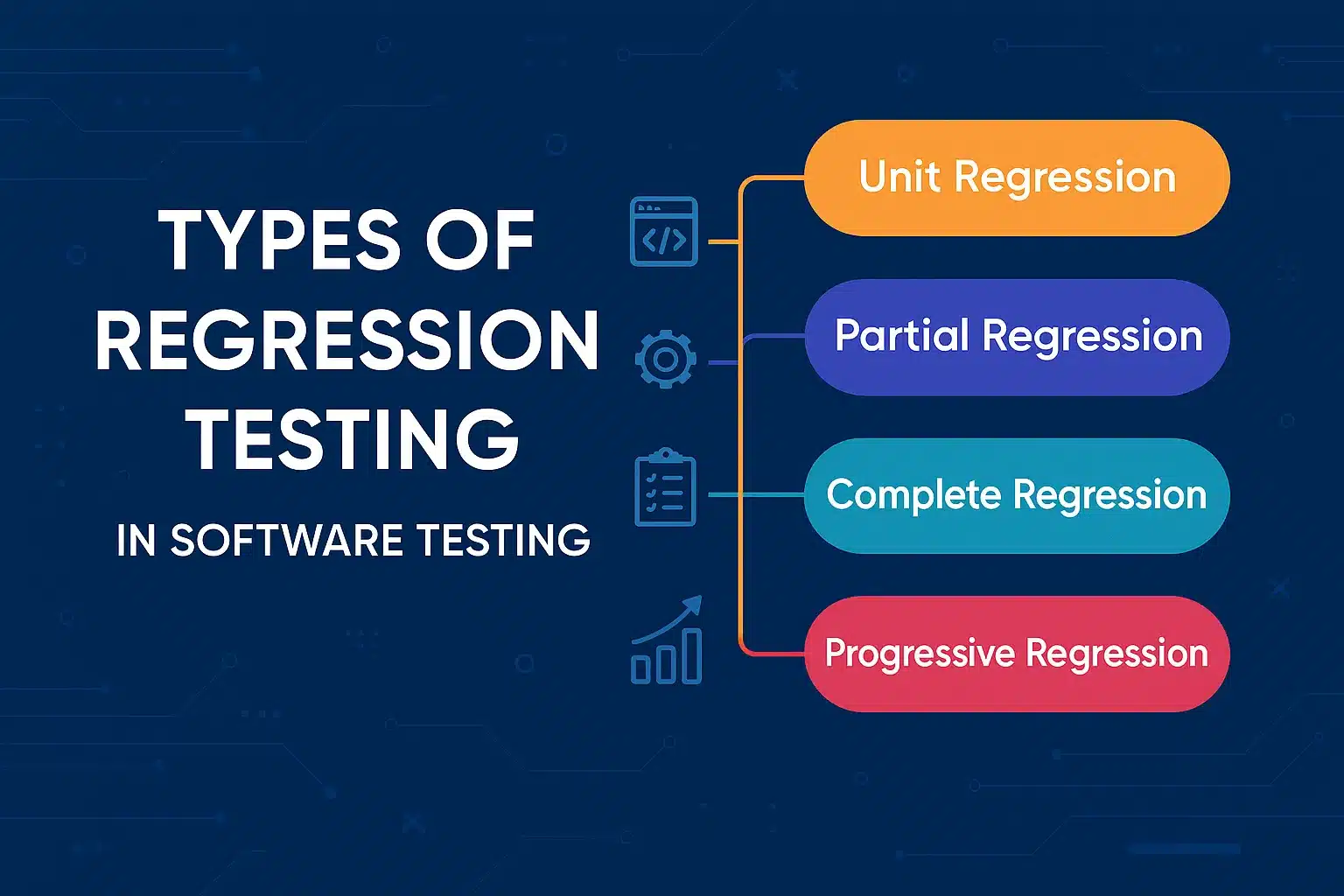
Types of regression testing provide structured ways to verify that existing functionality remains stable after code changes. By selecting the appropriate type, teams can balance test coverage with time and resource constraints.
For example, unit regression testing focuses on individual components to confirm that recent changes have not broken isolated logic. Partial regression testing targets specific areas affected by updates, while complete regression testing validates the entire application to ensure overall stability. Selective regression testing prioritizes high-risk or frequently used features to optimize effort.
Understanding these types of regression testing allows teams to apply the right level of validation at the right time. This leads to faster feedback, reduced regression risks, and more efficient quality assurance across agile and continuous delivery environments.
<grammarly-extension-vbars data-grammarly-shadow-root=”true”></grammarly-extension-vbars><grammarly-extension-vbars data-grammarly-shadow-root=”true”></grammarly-extension-vbars>
keploy.io
Types of Regression Testing and When to Use Each
Understand all types of regression testing, when to use each, and real examples. Learn best practices and how to pick the right regression testing approach.
Sorry, there were no replies found.
Log in to reply.